Why Employees Still Go ‘Outside the System’ for Bookings (And How to Fix It)

Corporate travel management systems are designed to bring structure - centralized bookings, policy compliance, negotiated rates, and complete visibility into travel spend. On paper, the model is clear and controlled.
In reality, it’s far from it.
Employees continue to book flights, hotels, and ground transport outside official systems - on personal apps, supplier websites, or third-party platforms. This behavior, often referred to as ‘rogue booking’ or ‘out-of-policy travel’, remains one of the biggest challenges in corporate travel management today.
And it’s not a minor issue.
According to the Deloitte 2025 Corporate Travel Study, only 49% of employees say they always use corporate booking tools.
That means over half of business travel activity is either partially or completely outside company systems, creating gaps in cost control, compliance, and visibility.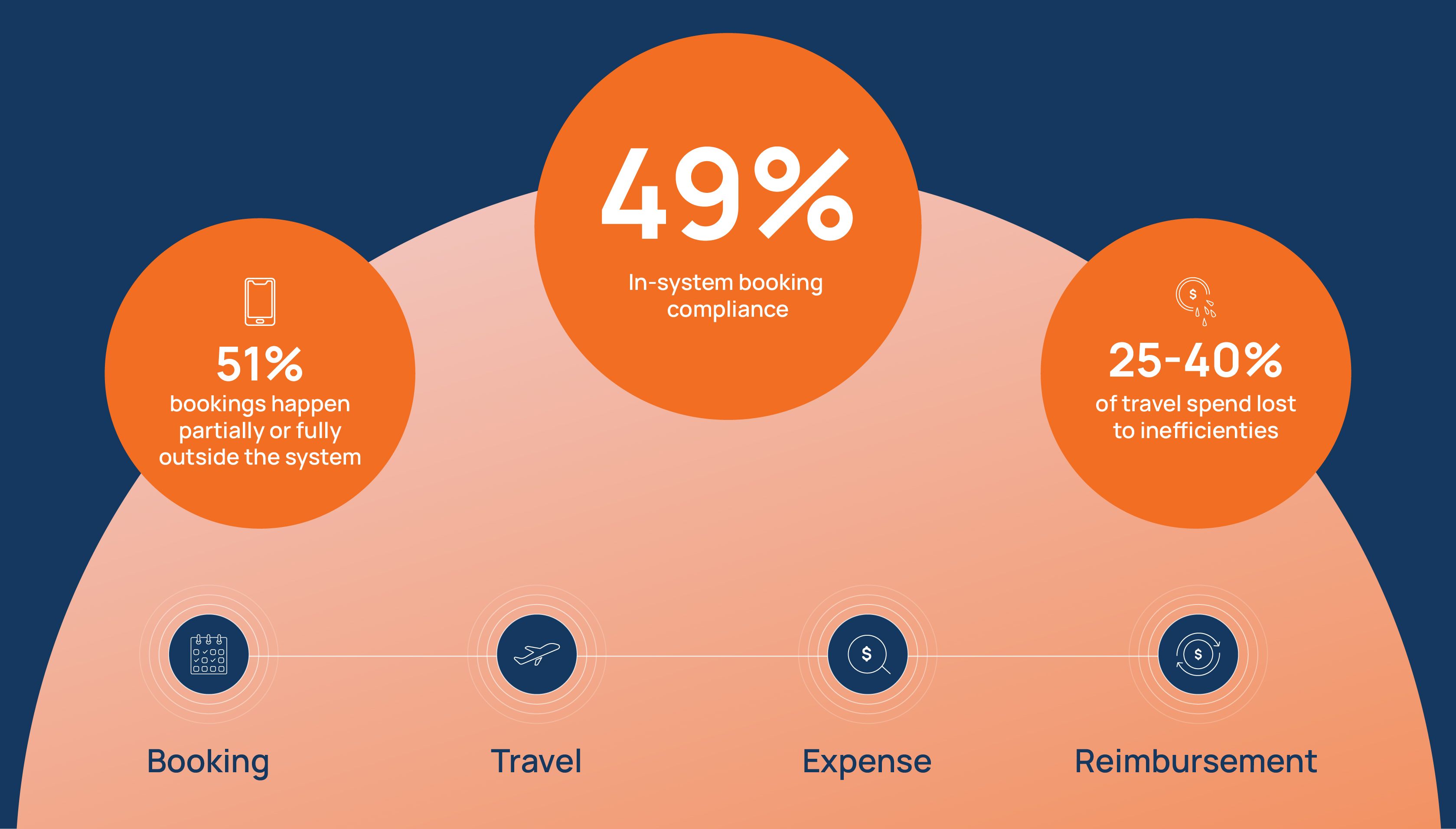
The Problem Isn’t Policy - It’s Experience
The default assumption is that employees go outside the system to save money.
But the data tells a different story. Employees are not actively trying to break policy, they are choosing the path of least friction. In most cases, that path happens to be outside corporate systems.
Today’s travelers are used to consumer-grade experiences - fast search, intuitive interfaces, real-time availability, flexible cancellations, and instant confirmations. When corporate booking tools fail to match that experience, adoption drops.
Deloitte’s research highlights that user experience remains a key factor influencing booking behavior, with employees historically preferring external platforms for better usability and broader choice.
This creates a simple but critical shift in understanding - compliance is no longer driven by policy, it is driven by usability.
Flexibility Has Become a Non-Negotiable Expectation
Business travel has evolved. It is no longer static or predictable.
Trips are booked closer to departure dates, meetings change, travel plans extend or shorten with little notice. In such an environment, flexibility is not a feature, it is a requirement.
Employees often choose to book directly with airlines or hotels because it gives them greater control over changes. Modifying a booking, rescheduling a flight, or handling cancellations is often faster and simpler outside corporate systems.
The Deloitte study reinforces this trend, noting that ease of changes and smoother booking experiences directly influence the adoption of corporate travel tools.
When flexibility is limited, employees don’t escalate, they bypass.
Out-of-System Bookings Create a Visibility Gap
The impact of rogue booking goes beyond higher travel costs. The real risk lies in lost visibility.
When bookings happen outside approved channels, organizations lose access to critical travel data:
- No real-time view of travel spend
- Limited tracking of supplier usage
- Weak policy compliance monitoring
- Reduced ability to ensure traveler safety (duty of care)
This fragmentation makes it difficult for finance and admin teams to make informed decisions. Booking compliance is essential for both cost control and traveler safety, underlining the operational risk of unmanaged travel activity.
Without centralized visibility, even well-defined travel programs lose effectiveness.
The Cost of Leakage Is Significant
Unmanaged or out-of-policy bookings also contribute directly to financial inefficiencies.
Industry estimates suggest that companies can lose 25-40% of their travel spend due to inefficiencies such as policy violations, missed negotiated rates, and lack of centralized control.
This ‘leakage’ is rarely visible in a single report. It accumulates over time, through small deviations, inconsistent bookings, and fragmented data.
The result is not just higher costs, but reduced negotiating power with suppliers and weaker long-term travel strategies.
Why Enforcement Alone Doesn’t Work
Faced with low compliance, many organizations respond by tightening policies - adding approval layers, enforcing stricter rules, or increasing monitoring.
However, this approach often fails to deliver results.
Despite stronger policies, adoption levels remain inconsistent. The reason is straightforward, enforcement does not eliminate friction.
Employees are more likely to comply when the system is easy to use - not when the rules are stricter.
If booking within the system takes longer, offers fewer options, or restricts flexibility, employees will continue to find alternatives - regardless of policy strength.
The Shift Toward Smarter Corporate Travel Management
The way forward is not stricter control, but better alignment between systems and user expectations.
Corporate travel programs are gradually evolving from rigid, policy-driven models to more flexible, user-centric ecosystems. The focus is shifting toward improving experience while maintaining visibility and compliance.
Organizations that are seeing better outcomes are investing in:
- Consumer-grade user experience that simplifies booking
- Built-in flexibility for modifications and disruptions
- Policy integration within the booking flow, rather than post-booking enforcement
- Centralized data capture, even when bookings happen across multiple channels
This marks a fundamental shift in corporate travel management - from control-based systems to adoption-driven models.
Final Thoughts
Employees are not intentionally bypassing corporate travel systems. They are responding to inefficiencies, limited flexibility, and gaps in user experience.
As long as external platforms offer faster, simpler, and more flexible booking experiences, out-of-system bookings will continue.
Solving this challenge requires more than policy changes. It requires rethinking how corporate travel systems are designed and experienced.
Because in today’s environment, adoption, not enforcement, is what ultimately drives compliance, visibility, and cost control in corporate travel management.
FAQs
1. What is rogue booking in corporate travel management?
Rogue booking, also known as out-of-policy travel, refers to employees booking flights, hotels, or other travel services outside approved corporate booking tools or travel management systems. This leads to reduced visibility, poor policy compliance, and higher travel costs for organizations.
2. Why do employees book outside corporate travel systems?
Employees often go outside corporate travel systems due to poor user experience, limited flexibility, and lack of real-time booking options. Modern travelers prefer faster, consumer-grade booking platforms that offer better control over changes and cancellations.
3. How does out-of-policy travel impact travel spend visibility?
Out-of-policy travel reduces real-time visibility into travel spend, making it difficult for companies to track expenses, enforce policies, and optimize costs. It also limits access to centralized data and impacts financial decision-making.
4. What are the challenges in corporate travel policy compliance?
Common challenges include low adoption of corporate booking tools, lack of awareness among employees, complex approval workflows, and systems that do not match user expectations. These factors often lead to policy violations and unmanaged travel spend.
5. How can companies improve corporate travel booking compliance?
Companies can improve compliance by implementing user-friendly, automated travel management systems that integrate policy controls within the booking process. Providing flexible booking options, real-time updates, and a seamless user experience encourages employees to stay within the system.

Disha Chatterjee
Senior Content MarketerIn this article
1.The Problem Isn’t Policy - It’s Experience
2.Flexibility Has Become a Non-Negotiable Expectation
3.Out-of-System Bookings Create a Visibility Gap
4.The Cost of Leakage Is Significant
5.Why Enforcement Alone Doesn’t Work
6.The Shift Toward Smarter Corporate Travel Management
7.Final Thoughts
8.FAQs

Related Blogs