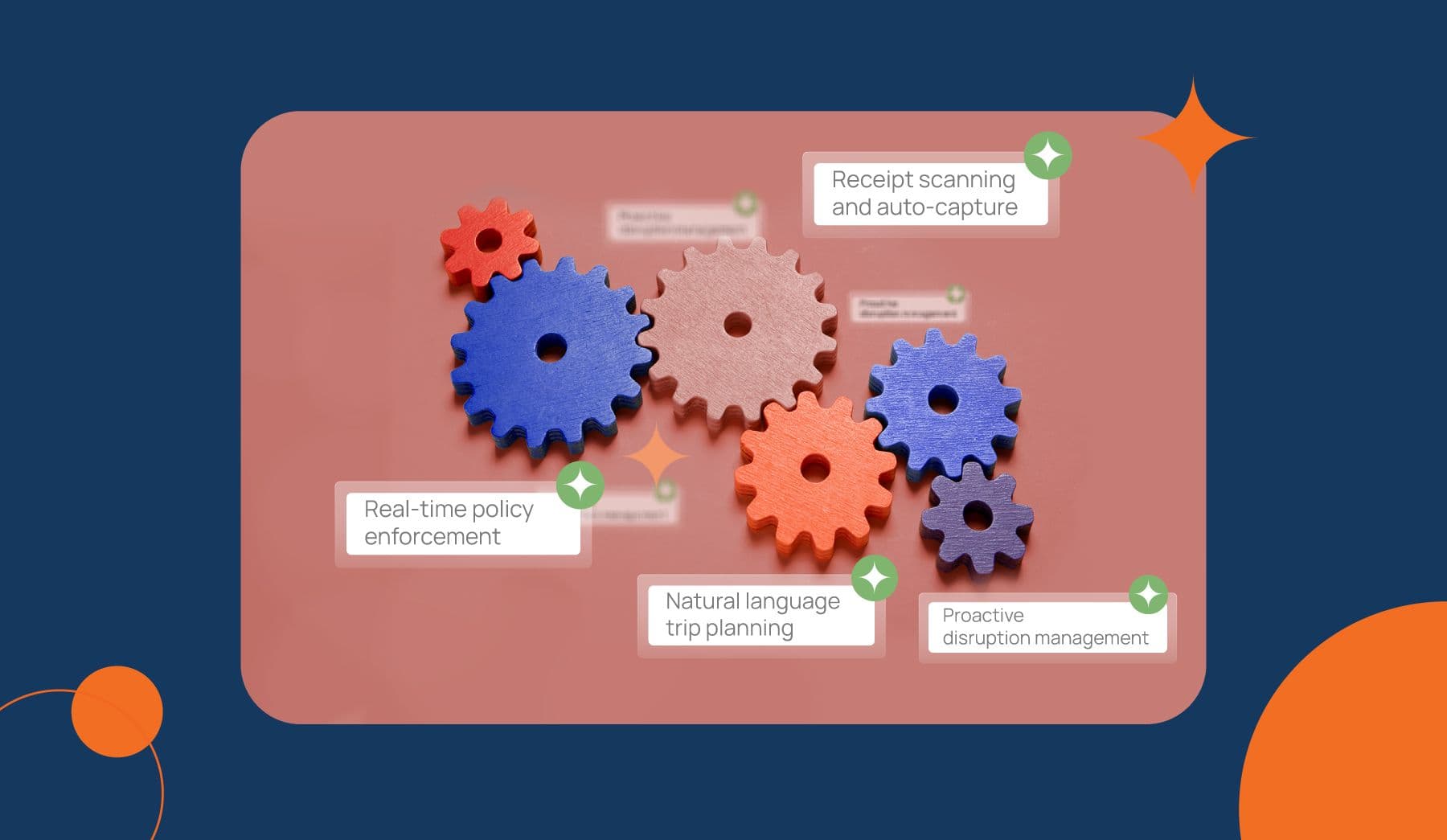
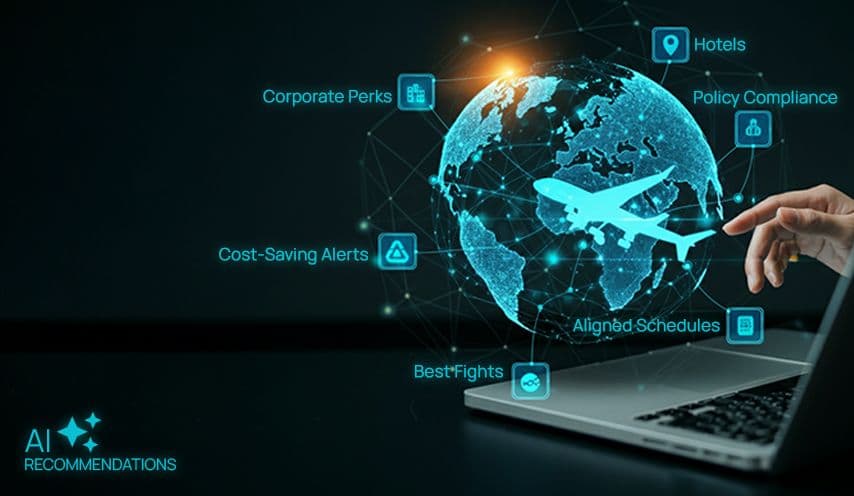
What CFOs Will Expect from Travel Technology in the Next Five Years
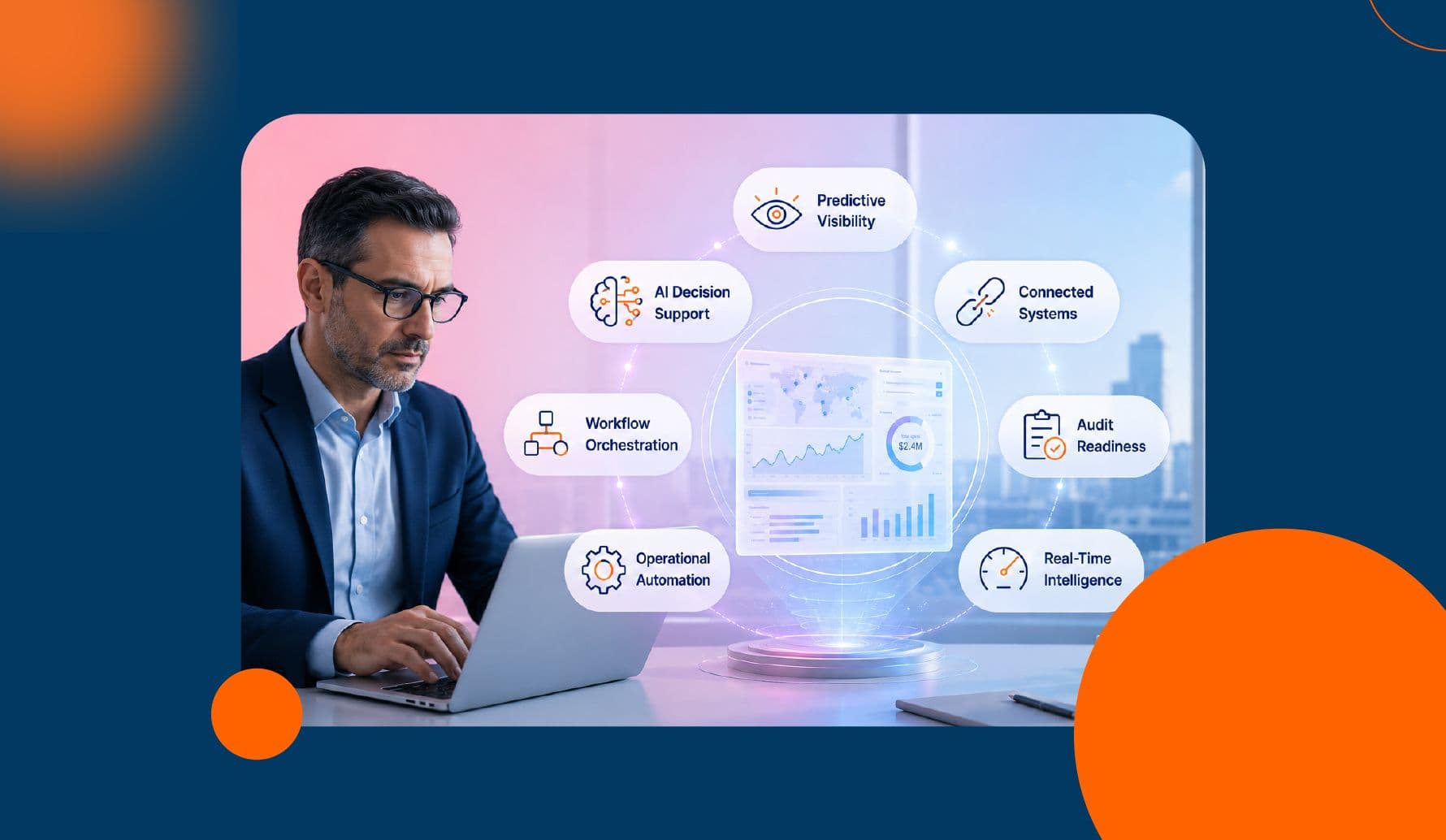
For decades, business travel technology has been evaluated primarily through the lens of efficiency. Could employees book faster? Were travel policies enforced? Could expenses be submitted digitally?
These capabilities helped organizations move away from manual processes and fragmented workflows. But as business travel enters a new phase of growth, the expectations surrounding travel technology are beginning to change.
According to the Global Business Travel Association (GBTA), global business travel spending is expected to reach $1.57 trillion in 2025 and surpass $2 trillion by 2029. Business travel is no longer recovering, it is expanding. As travel budgets grow and travel programs become more strategic, CFOs are looking beyond booking tools and expense workflows. They are evaluating how travel technology contributes to broader business objectives such as financial control, operational efficiency, compliance, and workforce productivity.
The question is no longer whether travel technology can support travel, rather, whether it can support the business.
The Shift from Visibility to Intelligence
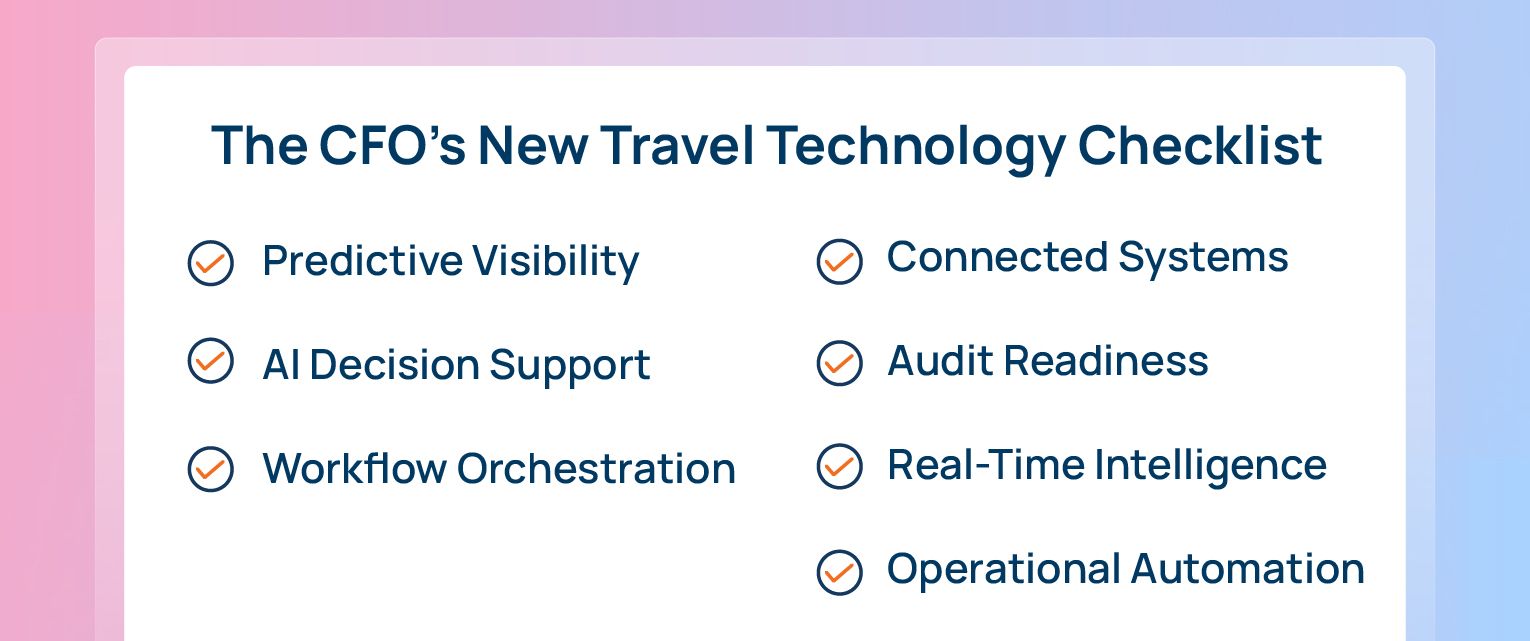
Most travel and expense systems today provide visibility. They tell organizations where money was spent, which departments traveled most, and whether policies were followed. While visibility remains important, it is increasingly becoming the minimum expectation.
Finance leaders today operate in an environment where decisions need to be made faster and with greater precision. Monthly reports and retrospective analyses often arrive too late to influence outcomes.
Over the next five years, CFOs will expect travel technology to evolve from reporting systems into intelligence platforms.
Instead of merely showing historical spend, systems will be expected to provide predictive insights into travel commitments, budget utilization, policy risks, and future liabilities. They will identify emerging trends, flag potential overruns, and recommend corrective actions before issues become costly.
In other words, travel technology will need to become proactive rather than reactive. The organizations that gain a competitive advantage will be those that can transform travel data into actionable business intelligence.
Travel Data Will Become Financial Data
One of the persistent challenges within many organizations is the fragmentation of information.
Booking data often resides in one platform. Expense data sits elsewhere. Financial records live inside ERP and accounting systems. Each system performs its function, but few provide a unified view of the complete travel lifecycle.
This separation may have been acceptable when travel was treated as a necessary operational expense. It is far less acceptable when travel represents a significant investment in revenue generation, customer relationships, project delivery, and business growth.
CFOs increasingly expect travel spend to be treated with the same rigor as other strategic business expenditures. This means travel technology can no longer operate as an isolated function. It must become part of a broader financial ecosystem.
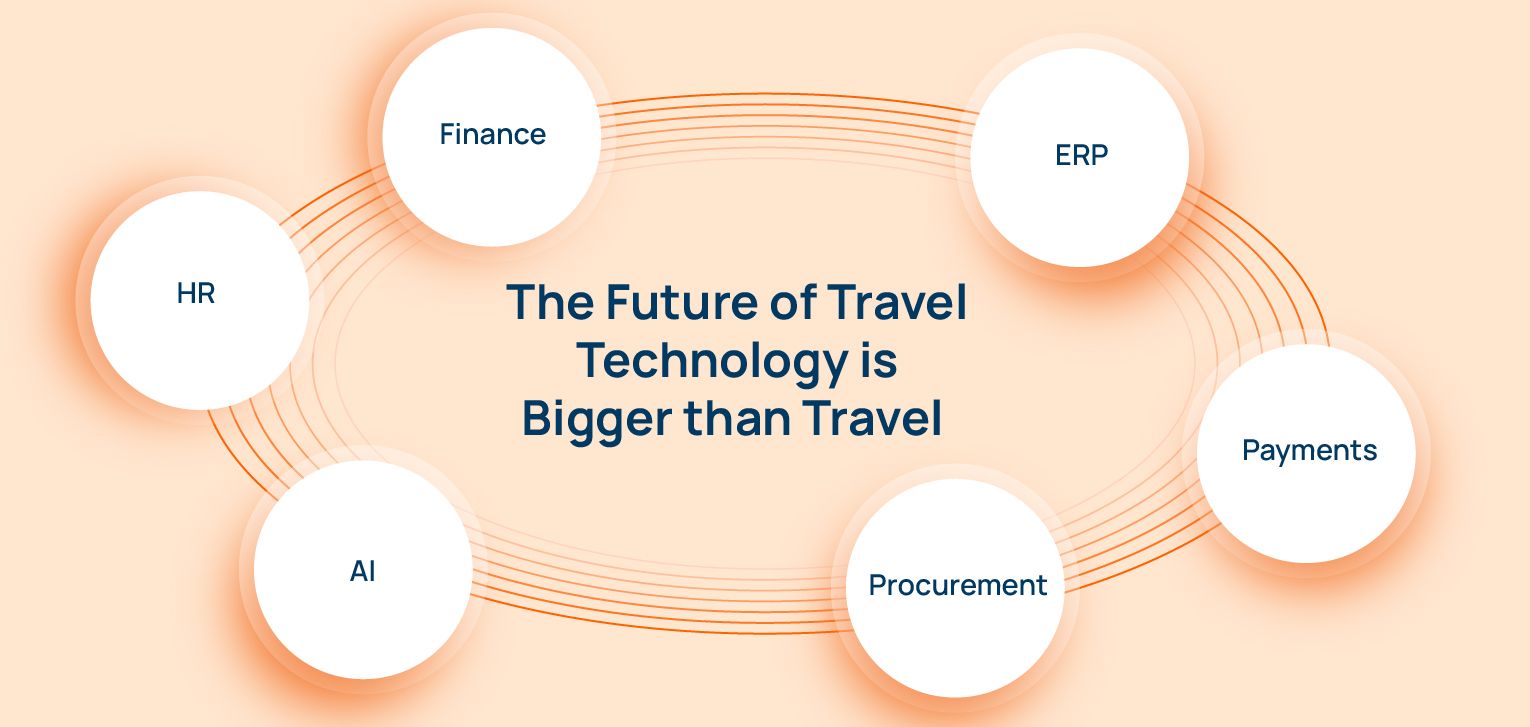
The future belongs to organizations that can connect travel, expense, finance, HR, and procurement data into a single operational framework. When that happens, travel stops being a disconnected activity and becomes a source of strategic insight.
The Rise of the Automation Paradox
Over the last decade, the business travel industry has invested heavily in automation.
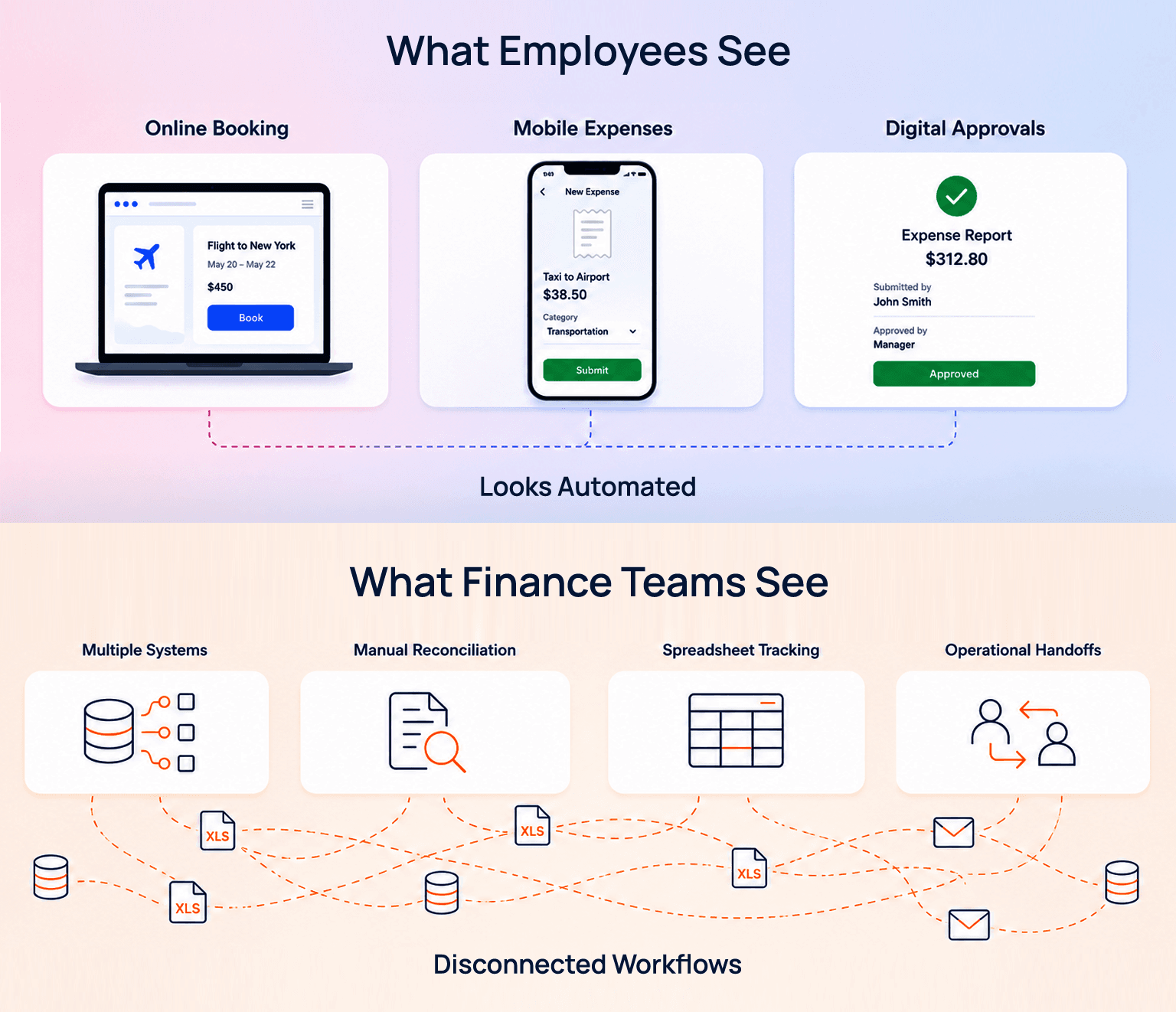
Booking processes have become digital. Expense capture has become mobile. Approvals have become faster and more accessible. Yet despite these advances, many organizations continue to experience friction throughout the travel lifecycle.
This challenge was highlighted in TripGain's State of Business Travel in India 2026 study. Across more than 200 stakeholders, a recurring theme emerged: while individual processes have been digitized, many organizations still struggle with fragmented systems and disconnected workflows.
We refer to this phenomenon as the Automation Paradox. On the surface, travel operations appear automated. Behind the scenes, however, critical activities often require manual intervention, coordination across multiple systems, and repetitive administrative effort.
The problem is not a lack of technology. The problem is that technology often automates individual tasks without connecting the entire process.
This distinction will become increasingly important over the next five years. CFOs will no longer evaluate platforms based solely on how effectively they automate a single workflow. They will evaluate them based on how effectively they eliminate operational friction across the entire journey.
The future is not task automation. It is workflow orchestration.
AI Will Become a Decision-Making Partner
Much of today's discussion around artificial intelligence in travel focuses on traveler convenience.
Can AI recommend a flight? Can it suggest a hotel? Can it improve the booking experience?
These applications are useful, but they represent only a fraction of the opportunity. The real impact of AI will be felt within finance and operations. Future travel platforms will help organizations make better decisions by analyzing spending patterns, forecasting travel demand, identifying policy risks, and highlighting opportunities for optimization.
Instead of simply recording what happened, systems will increasingly answer questions such as:
What is likely to happen next?
What risks are emerging?
Where can costs be reduced without compromising business outcomes?
Which travel decisions are generating the highest return?
As travel volumes increase, CFOs will rely on AI not merely to automate tasks but to improve decision quality. The value of travel technology will increasingly be measured by the quality of insights it generates rather than the number of processes it automates.
Compliance Will Become Invisible
Historically, compliance has been managed through controls, approvals, audits, and manual oversight. The challenge with this approach is that compliance often introduces friction into the user experience while increasing administrative burden for finance teams. Over the next five years, leading organizations will move toward embedded compliance models.
Instead of identifying violations after they occur, systems will prevent them before they happen. Policies will be enforced automatically. Exceptions will be tracked in real time. Documentation will be captured as part of normal workflows.
Compliance will become less visible to travelers and less burdensome for finance teams while becoming significantly more effective. This shift will allow organizations to reduce risk without sacrificing employee experience.
The End of Operational Silos
Perhaps the most significant expectation CFOs will place on travel technology is its ability to function within a connected enterprise.
Finance leaders are increasingly frustrated by fragmented technology environments where information must be manually transferred between systems, teams, and processes. Every disconnected workflow creates delays. Every manual handoff introduces risk. Every isolated platform limits visibility.
As organizations continue their digital transformation efforts, travel technology will be expected to operate seamlessly alongside HR systems, ERP platforms, accounting software, procurement tools, and broader enterprise infrastructure.
The value of a travel platform will no longer be measured by the number of features it offers. It will be measured by how effectively it connects people, processes, and data.
The future belongs to connected ecosystems, not standalone applications.
Connected Travel Operations
Business travel is entering a period of sustained growth. At the same time, finance leaders are being asked to manage increasing complexity without increasing operational overhead.
This reality is changing what organizations expect from travel technology.
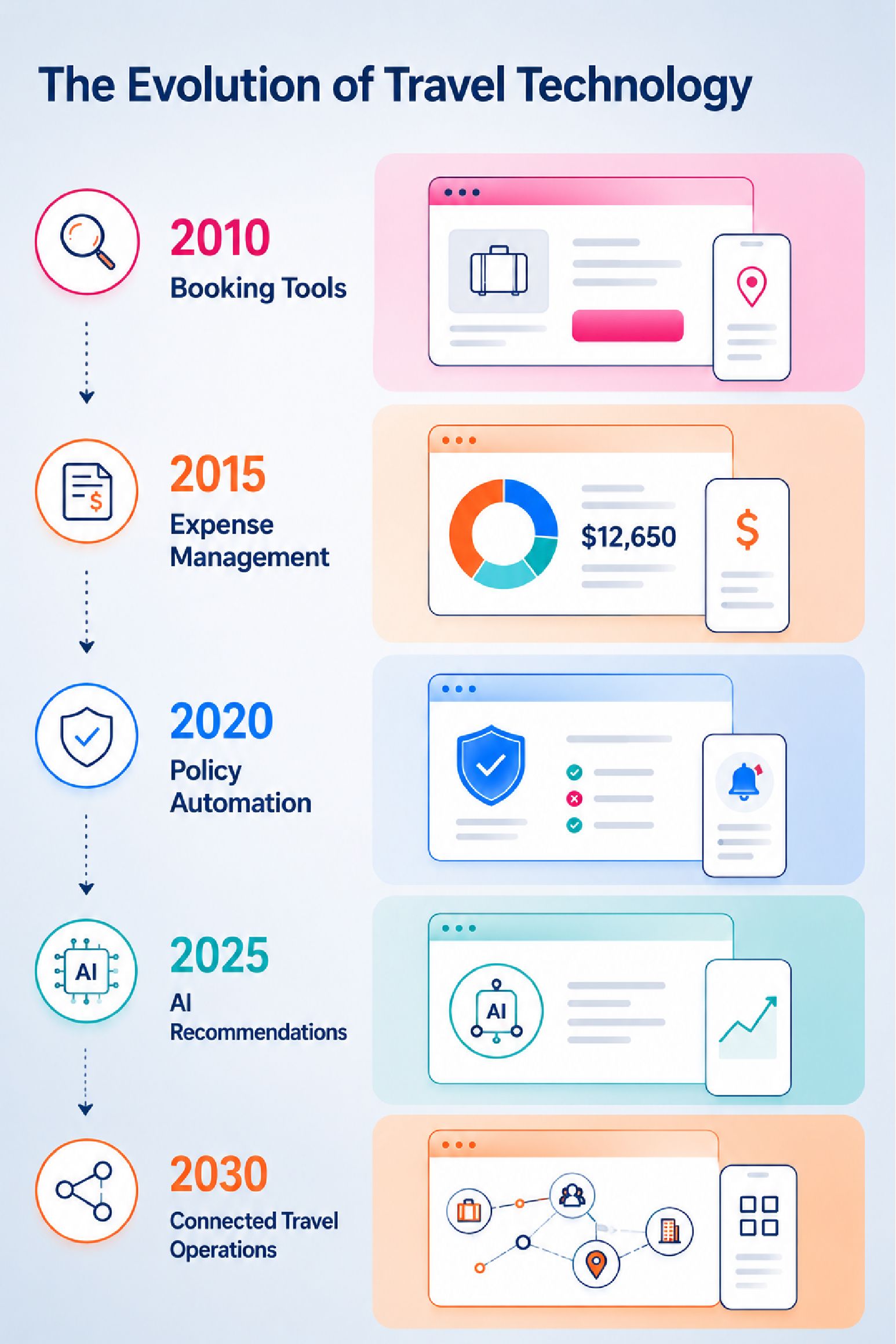
The next generation of platforms will not be defined by booking capabilities alone. They will be defined by their ability to deliver intelligence, connect workflows, automate outcomes, and provide complete operational visibility.
The shift is already underway - from visibility to intelligence, from digitization to orchestration, from isolated tools to connected ecosystems, from managing travel to managing travel operations.
For CFOs, the future of travel technology is not about helping employees get from one city to another. It is about building a more efficient, scalable, and intelligent business.

Disha Chatterjee
Senior Content MarketerIn this article
1.The Shift from Visibility to Intelligence
2.Travel Data Will Become Financial Data
3.The Rise of the Automation Paradox
4.AI Will Become a Decision-Making Partner
5.Compliance Will Become Invisible
6.The End of Operational Silos
7.Connected Travel Operations

Related Blogs