The Invisible Travel Desk: How AI Is Redefining Corporate Travel
Employees don't need another travel platform to learn. They need work to happen. AI copilots are shifting corporate travel from software people operate to intelligence that operates on their behalf.
For years, enterprise travel technology has been built around one assumption - if companies provide better software, employees will make better travel decisions.
So businesses invested in online booking tools. They digitized approvals. They automated expense reports. They introduced mobile apps, dashboards, and policy engines. Every innovation promised to make business travel easier.
Yet, for many employees, the process still feels like a chore.
They search for flights, compare hotels, check travel policies, seek approvals, upload receipts, reconcile expenses, and follow up on reimbursements. The technology may have evolved, but the responsibility has remained with the traveler.
Artificial intelligence is changing that equation.
The next evolution of corporate travel isn't another booking platform or a smarter expense tool. It's the emergence of AI copilots that don't simply assist employees - they complete the work alongside them.
The corporate travel desk isn't disappearing. It's becoming invisible.
From Software That Responds to Intelligence That Acts
The first generation of enterprise AI focused on answering questions. The next generation is designed to execute tasks.
Recent research published by Harvard Business Review argues that organizations looking to scale AI successfully should treat AI agents as digital teammates capable of carrying out work within established business processes, rather than viewing them as standalone productivity tools. The real transformation comes when AI is embedded into everyday operations instead of existing as a separate application.
That shift is particularly relevant for corporate travel.
A business trip isn't a single transaction. It's a connected series of decisions involving employees, managers, finance teams, travel policies, suppliers, calendars, budgets, and compliance requirements.
Historically, people have acted as the bridge between these systems. AI copilots are beginning to remove that burden.
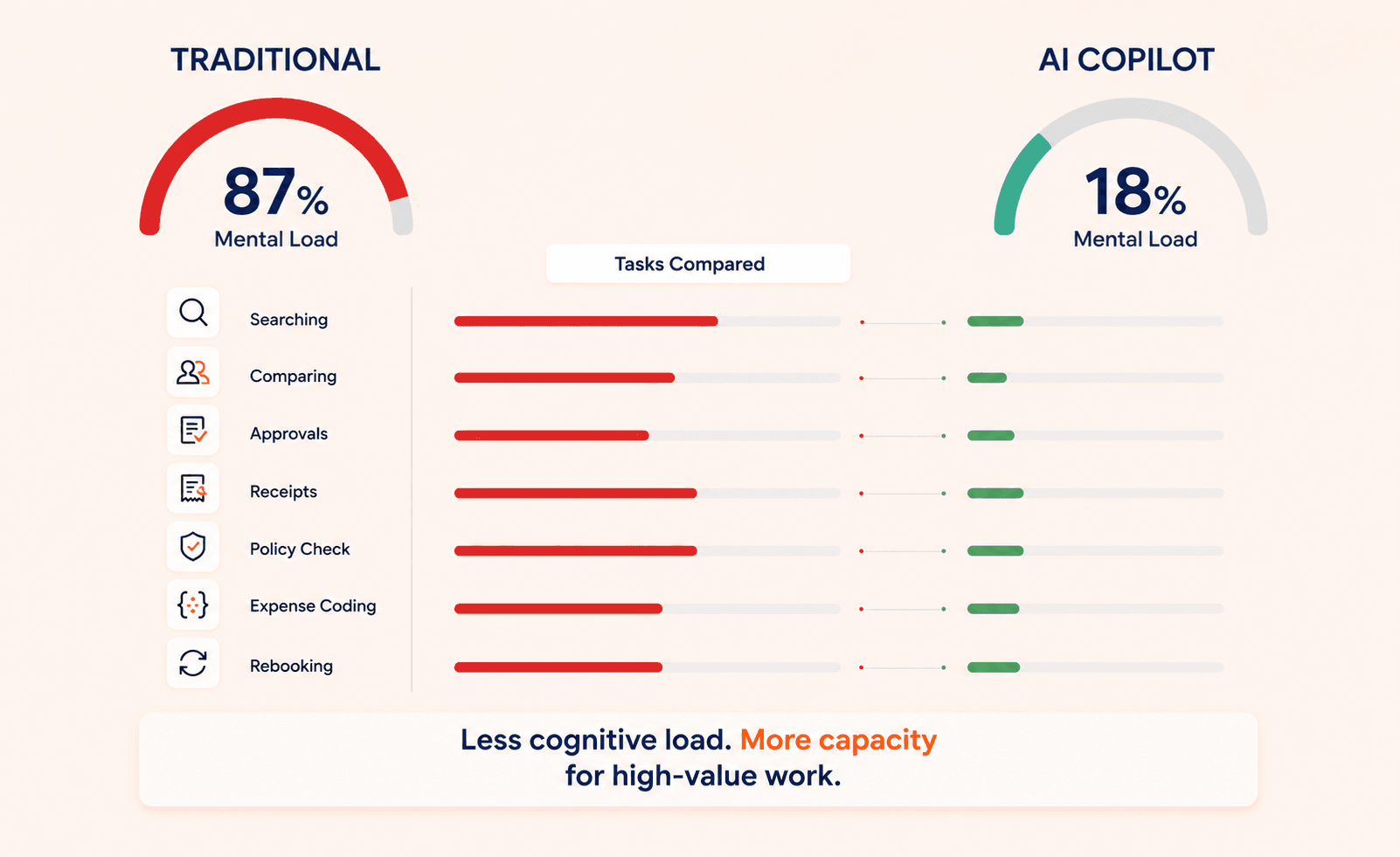
Instead of asking employees to navigate multiple applications, AI can coordinate those systems behind the scenes, bringing together information, applying business rules, and completing routine actions before a traveler even thinks about the next step.
The interface becomes less important than the outcome.
What an AI-Powered Travel Desk Actually Looks Like
The phrase “AI travel copilot” often brings to mind a chatbot that recommends flights. The reality is much more powerful.
Imagine an employee sending a simple message:
“I need to be in Chicago on Tuesday morning and return Wednesday evening.”
An AI-powered travel desk understands the request in context.
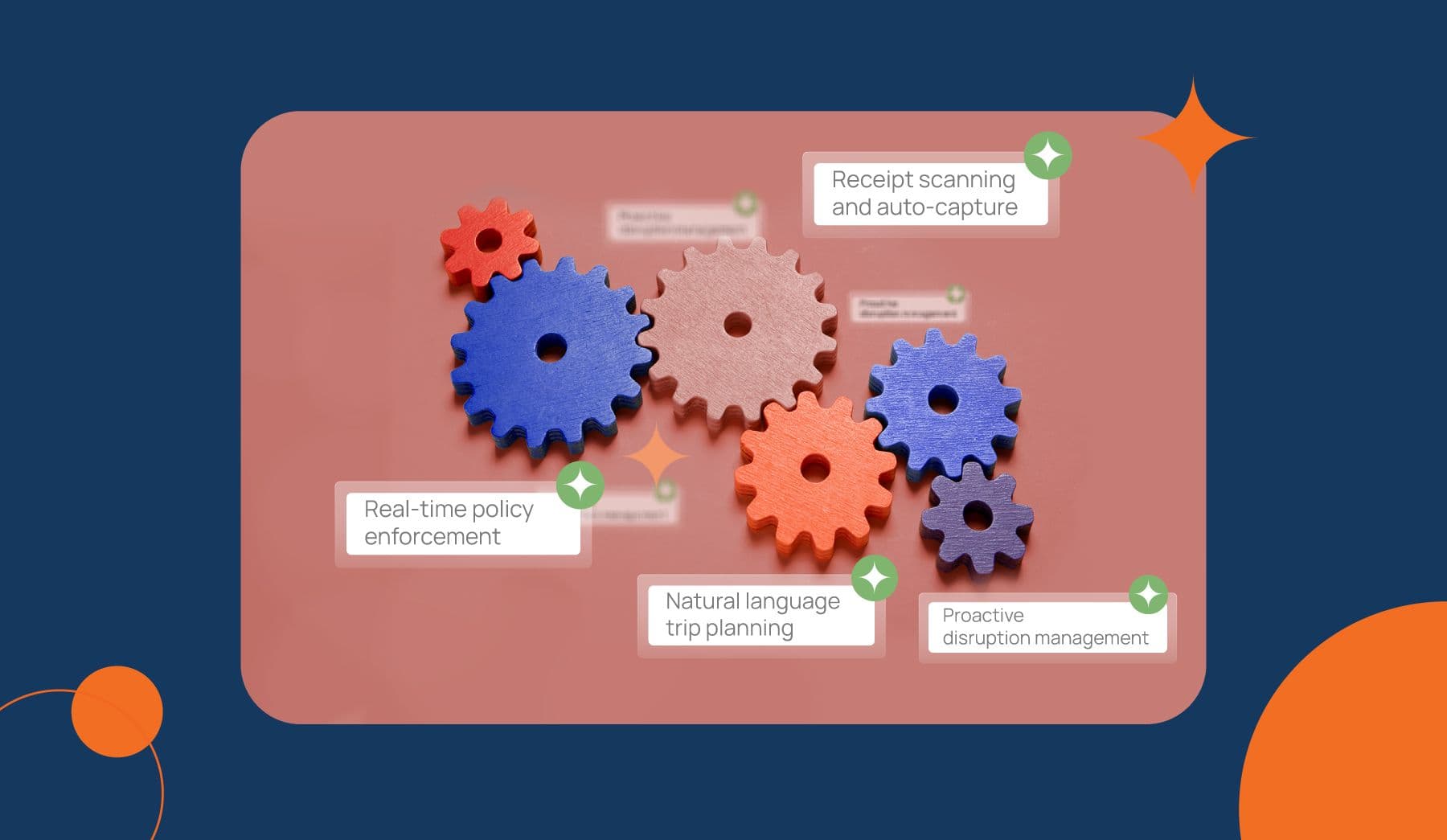
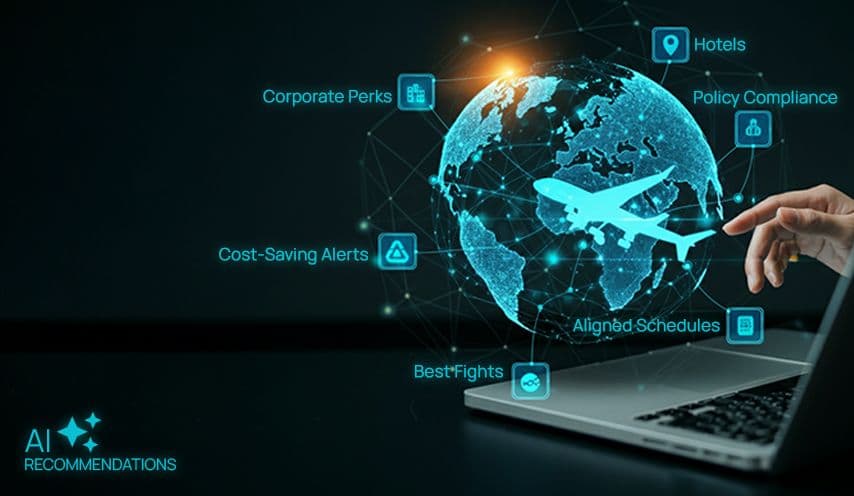
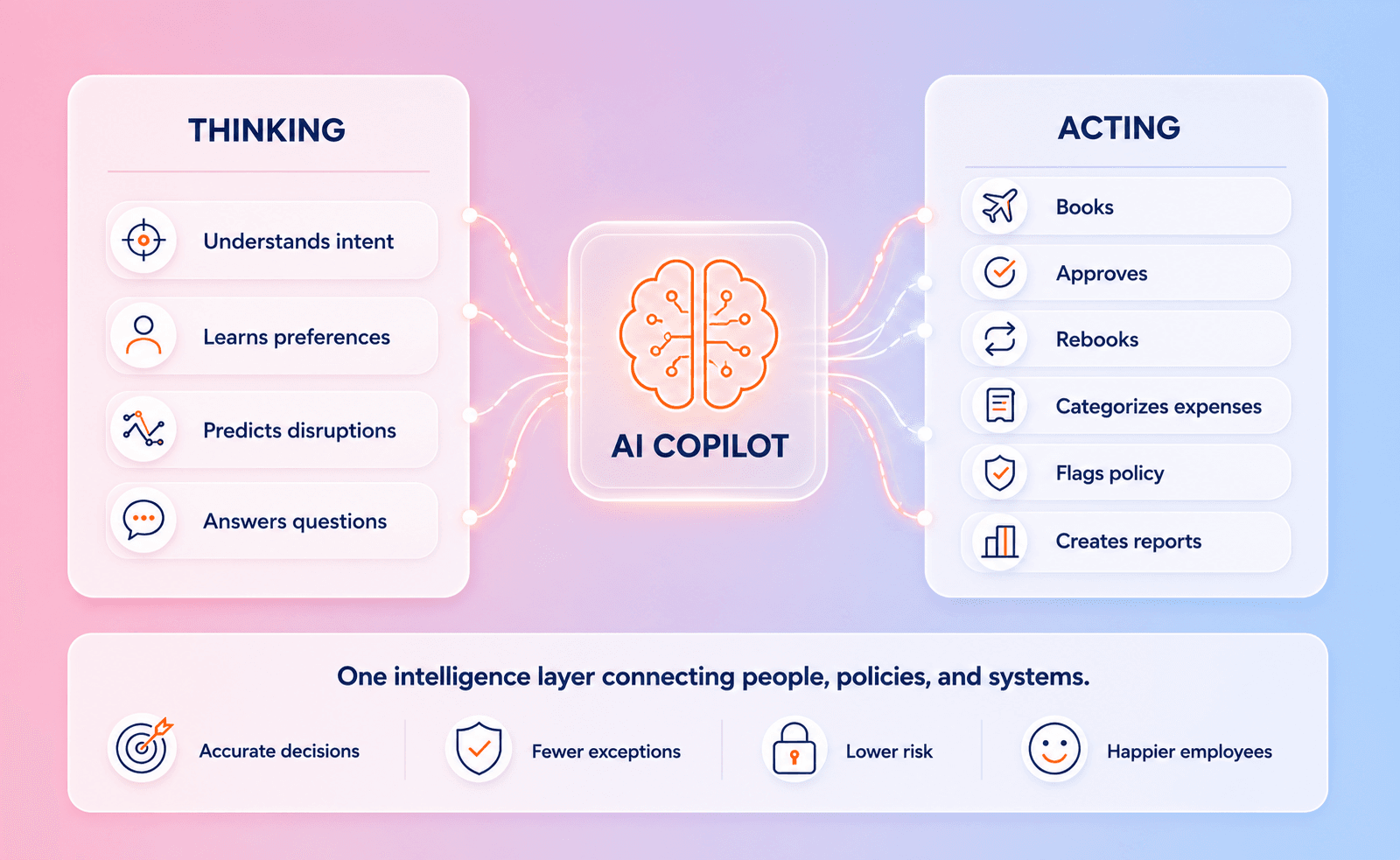
It checks the employee's calendar for scheduling conflicts. It reviews company travel policies. It identifies preferred airlines and negotiated hotel rates. It compares available itineraries based on cost, convenience, and policy compliance. If approval is required, it routes the request automatically to the right manager.
Once approved, it confirms bookings, updates the employee's calendar, shares the itinerary, and continues monitoring the journey for delays or disruptions.
If weather affects a connecting flight, alternative options can be recommended immediately, without waiting for the traveler to start searching again.
The employee hasn't operated multiple systems. They've simply communicated their intent. That's a fundamental shift from automation to orchestration.
Why Expense Management Is Changing Even Faster
Expense management has traditionally started after the trip ends. Collect receipts, fill out forms, submit claims, wait for reimbursement. It's a workflow built around documenting what has already happened. AI changes that sequence entirely.
Because travel bookings, itineraries, payment data, merchant information, company policies, and approval workflows already exist across enterprise systems, AI can begin assembling expense records throughout the journey rather than after it.
Instead of asking employees to recreate every transaction from memory, AI can match bookings with card transactions, categorize expenses, identify missing information, flag policy exceptions, and prepare reports before travelers even return to the office. In many cases, the employee's role shifts from creating an expense report to simply reviewing and confirming one.
This isn't just about convenience. It's about giving finance teams cleaner data, reducing manual corrections, improving compliance, and accelerating reimbursements without increasing administrative effort.
According to Reuters, major financial services firms are investing heavily in AI-driven expense management capabilities as enterprises seek faster, more intelligent financial workflows. The focus is no longer just automation - it is decision support that reduces manual intervention across finance operations.
The Biggest Benefit Isn't Speed
Whenever AI enters the conversation, businesses naturally ask one question:
“How much faster will this make our process?”
Speed matters. But it's becoming the wrong metric. The greater opportunity lies in reducing the number of decisions employees have to make in the first place.
Think about a typical business trip. Every traveler makes dozens of small decisions:
- Which flight should I choose?
- Does this hotel comply with policy?
- Who needs to approve this?
- Where should I upload this receipt?
- Have I exceeded my meal allowance?
- Which project should this expense be assigned to?
Individually, these decisions seem minor. Collectively, they consume hours of employee attention every month.
AI copilots remove much of that cognitive load by handling routine decisions according to company policies while escalating only the exceptions that require human judgment. That changes how organizations should measure success.
Instead of tracking only booking times or reimbursement cycles, forward-looking companies are beginning to evaluate metrics such as:
- Employee effort eliminated
- Manual approvals avoided
- Policy exceptions prevented
- Administrative hours saved
- Finance accuracy improved
- Travel disruptions resolved proactively
These indicators reflect something much larger than operational efficiency. They measure how effectively AI is helping people focus on higher-value work.
The Human Role Isn't Disappearing
One of the biggest misconceptions about AI is that it replaces people. In corporate travel, the opposite is more likely.
Travel managers will continue to define supplier strategies, negotiate contracts, oversee traveler safety, and manage policy decisions.
Finance teams will continue to govern spending, ensure compliance, and interpret financial performance.
Managers will continue to make business decisions that require experience and context.
What changes is the amount of routine administrative work surrounding those responsibilities. The AI copilot becomes the operational layer that executes repetitive tasks consistently while keeping humans in control of exceptions and strategic decisions.
In other words, people stop managing workflows. They start managing outcomes.
The Future of Enterprise Travel Is Invisible
For years, enterprise travel technology competed by adding more features - more dashboards, more forms, more workflows, more screens.
AI is taking the industry in the opposite direction.
The most successful travel experiences of the next decade may not be the ones with the most powerful interface. They may be the ones where employees barely notice the technology at all.
Business travelers won't think about booking systems, approval portals, or expense software. They'll simply describe what they need, the AI will coordinate the rest. That doesn't eliminate governance.
It strengthens it by applying policies consistently, surfacing exceptions intelligently, and giving travel managers and finance teams greater visibility across every journey.
The invisible travel desk isn't about removing people from the process. It's about removing unnecessary work from people. And that's what makes AI copilots more than the next feature in enterprise travel.
They represent a new operating model, one where travel, expenses, approvals, and compliance work together through intelligence rather than interfaces.
As enterprises continue to rethink productivity in the age of AI, the organizations that gain the greatest advantage won't necessarily be the ones with the most advanced software. They'll be the ones where employees spend the least amount of time thinking about it.

Disha Chatterjee
Senior Content MarketerIn this article
1.From Software That Responds to Intelligence That Acts
2.What an AI-Powered Travel Desk Actually Looks Like
3.Why Expense Management Is Changing Even Faster
4.The Biggest Benefit Isn't Speed
5.The Human Role Isn't Disappearing
6.The Future of Enterprise Travel Is Invisible

Related Blogs