MICE Is Moving into the Boardroom: Why Meetings and Events Are Becoming a Strategic Spend Category

Meetings, incentives, conferences, and exhibitions have traditionally been managed as an extension of corporate events, marketing, or travel programs. Budgets are allocated, venues are sourced, attendees are coordinated, and suppliers are managed, often through processes that sit outside the organization’s broader travel and expense infrastructure.
That model is becoming harder to sustain.
As companies place greater emphasis on cost discipline, measurable business outcomes, and better control over enterprise spend, MICE is increasingly being viewed through a different lens - not simply as an event activity, but as a significant corporate spend category that deserves greater financial visibility.
The shift is not about turning every event decision into a finance exercise. It is about recognizing that the financial complexity of MICE has grown - and that the value of these programs can no longer be assessed independently of the money being committed to them.
MICE Represents a Significant Share of Business Travel Economics
The scale of meetings and events helps explain why this conversation is gaining momentum.
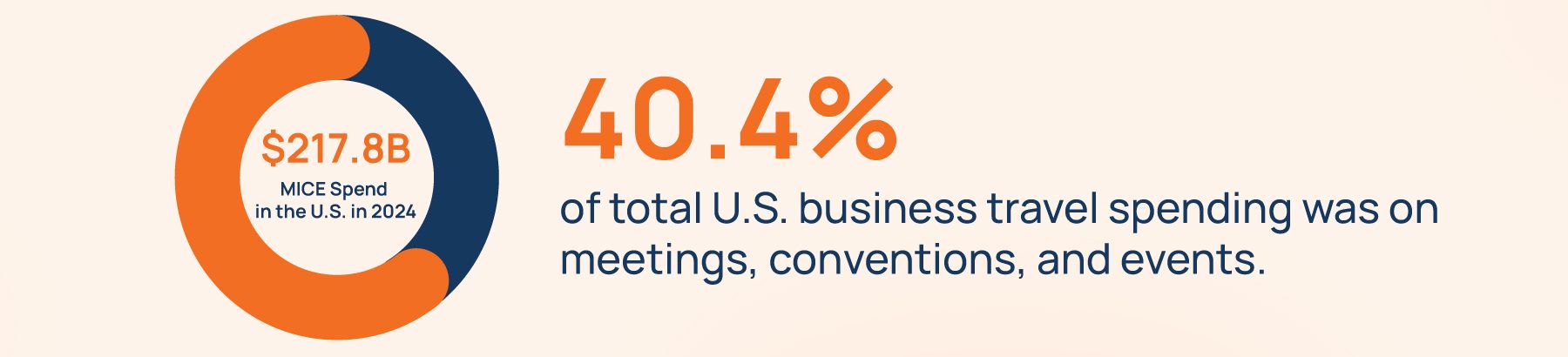
According to the Global Business Travel Association, meetings, conventions and events accounted for $217.8 billion, or 40.4%, of U.S. business travel spending in 2024. The spending covers a broad ecosystem, including accommodation, food and beverage, production, speakers, and event management.
Globally, business travel itself is expected to reach $1.71 trillion in 2026, according to GBTA's latest forecast.
These figures put MICE in a different category from a discretionary line item that can simply be managed within an events team's budget.
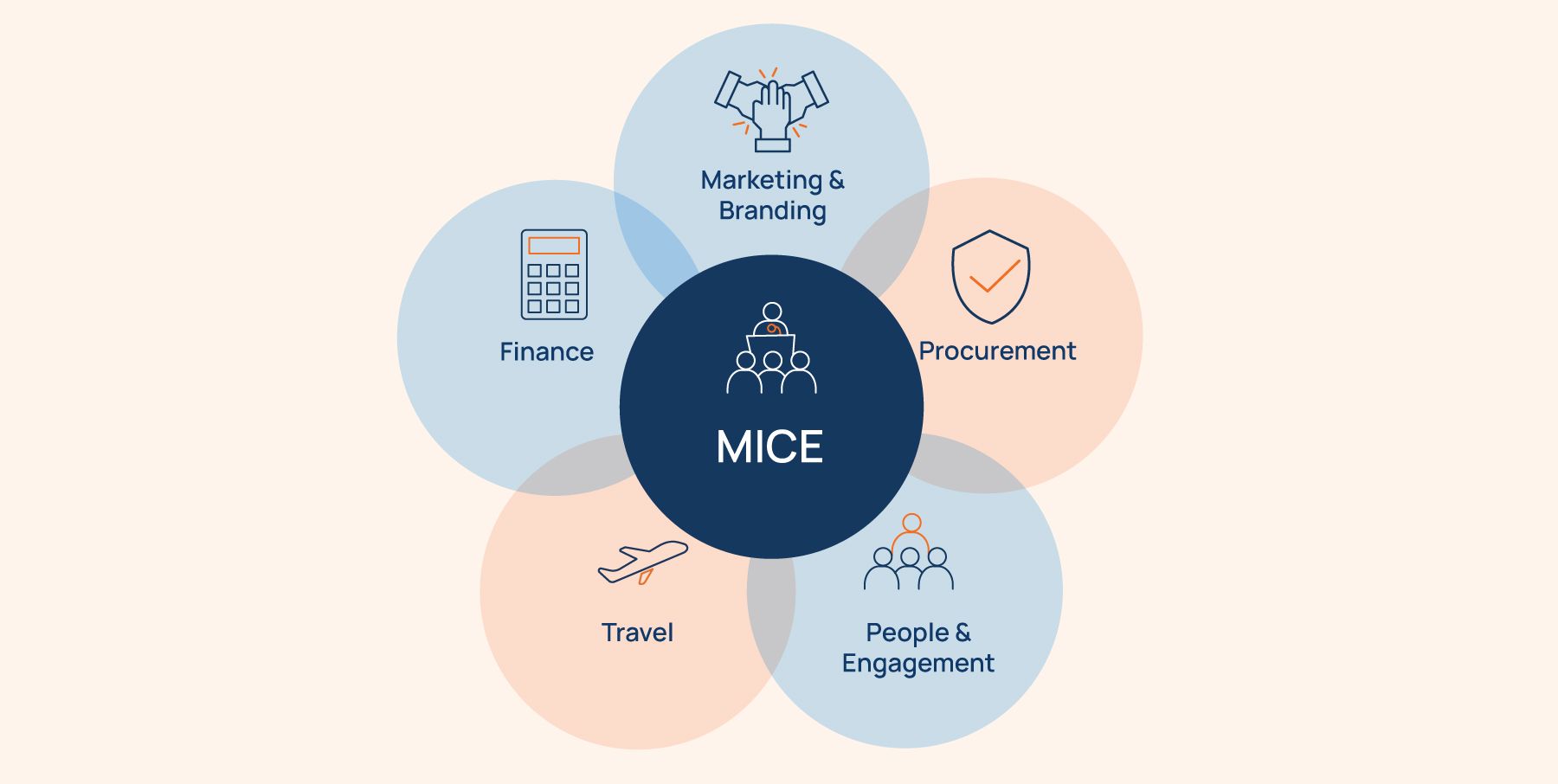
It sits at the intersection of travel, hospitality, procurement, marketing, employee engagement, and, increasingly, finance.
That intersection creates a challenge - MICE spend is often distributed across multiple suppliers, cost centers, payment methods, and internal teams. The resulting data can be difficult to consolidate, analyze, and reconcile with the rest of an organization's travel and expense activity.
The Economics of MICE are Changing
The pressure is not simply coming from the size of the spend. The economics of running events are changing as well.
Organizations want events that create stronger relationships, improve employee engagement, support sales, and generate meaningful business outcomes. But they are also operating in an environment where travel, accommodation, food and beverage, and supplier costs remain under pressure.
The answer cannot simply be to spend less. It is to understand where the money is going, what is driving the cost, and what the organization is getting in return.
That requires MICE to be managed with the same level of financial discipline increasingly applied to other major corporate spend categories.
From Event Budget to Enterprise Spend
Traditionally, an event budget might be viewed as a relatively straightforward calculation -
Venue + travel + accommodation + food + production + other event costs.
In practice, the financial picture is much more complicated.
A single corporate event can involve airlines, hotels, ground transportation providers, venues, caterers, production agencies, technology vendors, and other service providers. Attendee travel may be booked through one channel while venue and supplier payments happen through another. Expenses can then arrive through invoices, corporate cards, reimbursements, or manual submissions.
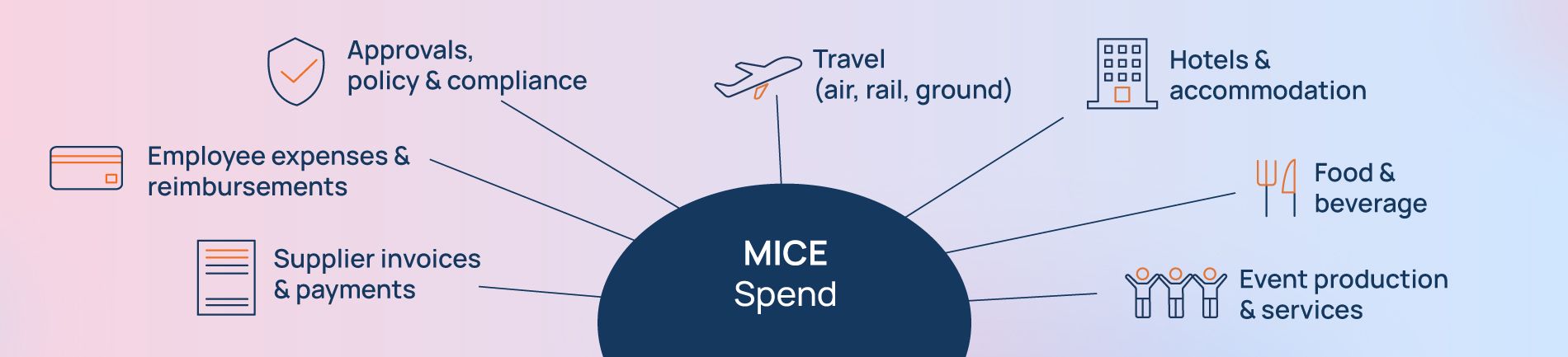
The event may be managed successfully from an operational perspective while still leaving finance with a fragmented view of the total spend.
This is where the distinction between event management and spend management becomes important.
An event team may know exactly how many people attended, whether the venue delivered as promised, and whether the experience met expectations. Finance, however, needs to answer a different set of questions:
- What was the total cost of the event?
- How was that spend distributed across categories and suppliers?
- Did actual spending remain within the approved budget?
- Where did costs exceed expectations?
- Which expenses were policy-compliant?
- How much was committed before the event versus incurred during or after it?
- How does the cost compare with similar events?
- What business outcome did the spend support?
The ability to answer these questions is what turns MICE from an event activity into a strategic spend category.
Visibility Matters more When Costs are Rising
When budgets are under pressure, organizations naturally look for savings. But cost-cutting without visibility can be counterproductive.
For example, reducing accommodation costs may appear attractive until it affects attendee experience or increases transportation requirements. Choosing a cheaper venue may lower the headline price while increasing production or logistics costs. Cutting event services may reduce spending but also affect engagement.
The more complex the event, the more difficult it becomes to understand these trade-offs without consolidated data.
This is why MICE programs increasingly need a total-cost view, rather than isolated visibility into individual transactions.
The Data Problem behind MICE
One of the biggest obstacles to strategic MICE management is that the data is often scattered.
Travel bookings may sit on a corporate travel platform. Hotel contracts may be managed separately. Venue invoices may be processed through procurement. Employee expenses may enter the finance system later. Agency fees and production costs may sit in yet another set of records.
Each system may provide a useful piece of information. The challenge is bringing those pieces together. Without that consolidated view, organizations can struggle to determine the true cost of an event or compare performance across events.
This becomes particularly important for companies running multiple conferences, sales meetings, leadership offsites, incentive trips, or customer events throughout the year.
The question then moves from “How much did this event cost?” to “What does our entire MICE program cost, and what are we learning from it?”
That is a much more strategic question.
Technology is Bringing MICE Closer to the Enterprise Travel and Expense Ecosystem
The technology conversation around MICE is also evolving.
Event technology has historically focused heavily on registration, attendee engagement, venue sourcing, and event experience. Those capabilities remain important. But there is growing value in connecting the event layer with the broader corporate travel and expense ecosystem.
Consider a corporate conference involving hundreds of employees.
The organization may need to manage flights, accommodation, transfers, event registrations, policy checks, approvals, supplier invoices, and employee expenses. If these processes operate independently, the organization can end up with several disconnected versions of the same event's financial picture.
Connecting these workflows can provide a more complete view of the spend lifecycle - from planning and booking through payment, reconciliation, and reporting.
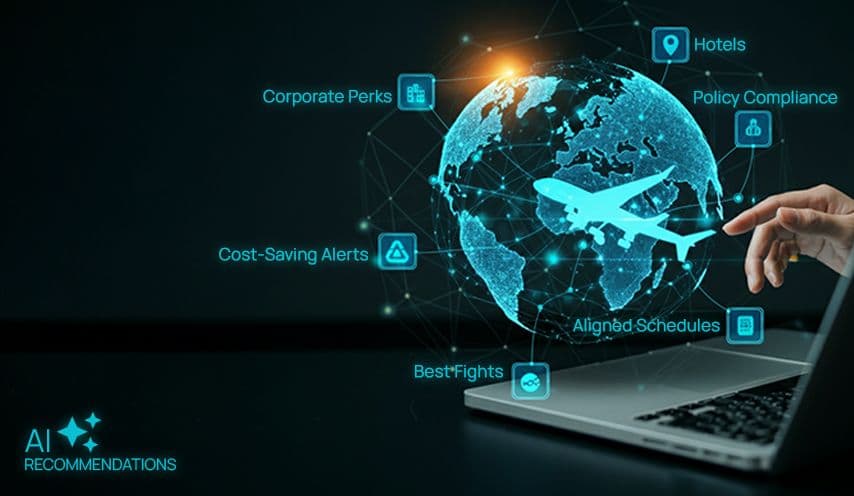
This is also where AI has an emerging role. The opportunity is not simply to use AI to generate event communications or automate administrative tasks. More valuable applications could involve identifying unusual spend patterns, comparing event costs, flagging policy exceptions, forecasting expenses, and helping finance teams understand where spend is moving.
AI adoption in MICE will increasingly need to demonstrate measurable operational or financial value, rather than simply adding another layer of technology.
Finance and MICE Teams Need to Work from the Same Picture
Treating MICE as a strategic spend category does not mean finance should take over event management.
Event teams remain closest to attendee experience, supplier relationships, and the practical realities of delivering an event. Finance brings a different perspective: controls, forecasting, reconciliation, compliance, and return on spend.
The opportunity lies in connecting those perspectives.
When event teams and finance operate from the same underlying data, organizations can make better decisions without sacrificing either financial discipline or event quality.
For example, finance can see where costs are increasing while event teams can understand the operational reason behind those increases. Procurement can identify recurring supplier relationships while event teams can assess supplier performance. Leadership can evaluate event investment against business objectives rather than looking at individual invoices in isolation.
That is a more mature approach to MICE management.
The Next Phase of MICE Is About Value, Not Just Volume
The evolution of MICE is not about moving events entirely under finance. It is about recognizing that the financial and strategic importance of these programs has outgrown the way they have traditionally been managed.
As in-person engagement continues to hold value, organizations are becoming more selective about where they invest.
The organizations that manage this well will not necessarily be those that spend the least on MICE. They will be the ones that understand their spend most clearly.
That means bringing travel, accommodation, supplier payments, employee expenses, and event costs into a more connected view; using data to identify inefficiencies; applying appropriate controls without compromising experience; and measuring events against the business outcomes they are designed to achieve.
MICE is becoming too financially significant and operationally complex to remain a siloed event function. The next stage is a more connected model - one where events, travel, and finance work from the same picture of spend and value.
And that is what makes MICE a strategic enterprise category, not simply an events budget.

Disha Chatterjee
Senior Content MarketerIn this article
1.MICE Represents a Significant Share of Business Travel Economics
2.The Economics of MICE are Changing
3.From Event Budget to Enterprise Spend
4.Visibility Matters more When Costs are Rising
5.The Data Problem behind MICE
6.Technology is bringing MICE Closer to the Enterprise Travel and Expense Ecosystem
7.Finance and MICE Teams need to Work from the Same Picture
8.The Next Phase of MICE Is About Value, Not Just Volume

Related Blogs