Bleisure in the Modern Enterprise: Managing Risk, Compliance, and Expense Control in a Flexible Travel Era

In the evolving landscape of corporate travel, the traditional model - rigid business itineraries tightly tethered to enterprise policy - is giving way to a more flexible but complex paradigm. Today, a substantial share of corporate trips blend business obligations with personal time, a phenomenon known as bleisure travel. Data suggests that globally two-thirds of business travelers extend work trips to include leisure activities (source).
This trend presents a strategic conundrum for CFOs, procurement leads, and risk managers - how can organizations support employee flexibility while maintaining control over costs, compliance, and duty of care responsibilities, all without introducing inefficiency or exposure? The answer does not lie in restriction but in refined governance frameworks, robust expense management, and a risk-aware approach to blended travel.
Bleisure Travel - How Significant Is It? What CFOs Must Know
Bleisure travel is not a fringe behavior. Rather than occasional outliers, statistics show it is now mainstream:
- 86% of business travelers are interested in ‘bleisure’ travel, with 56% indicating they have extended a work trip for leisure purposes (source)
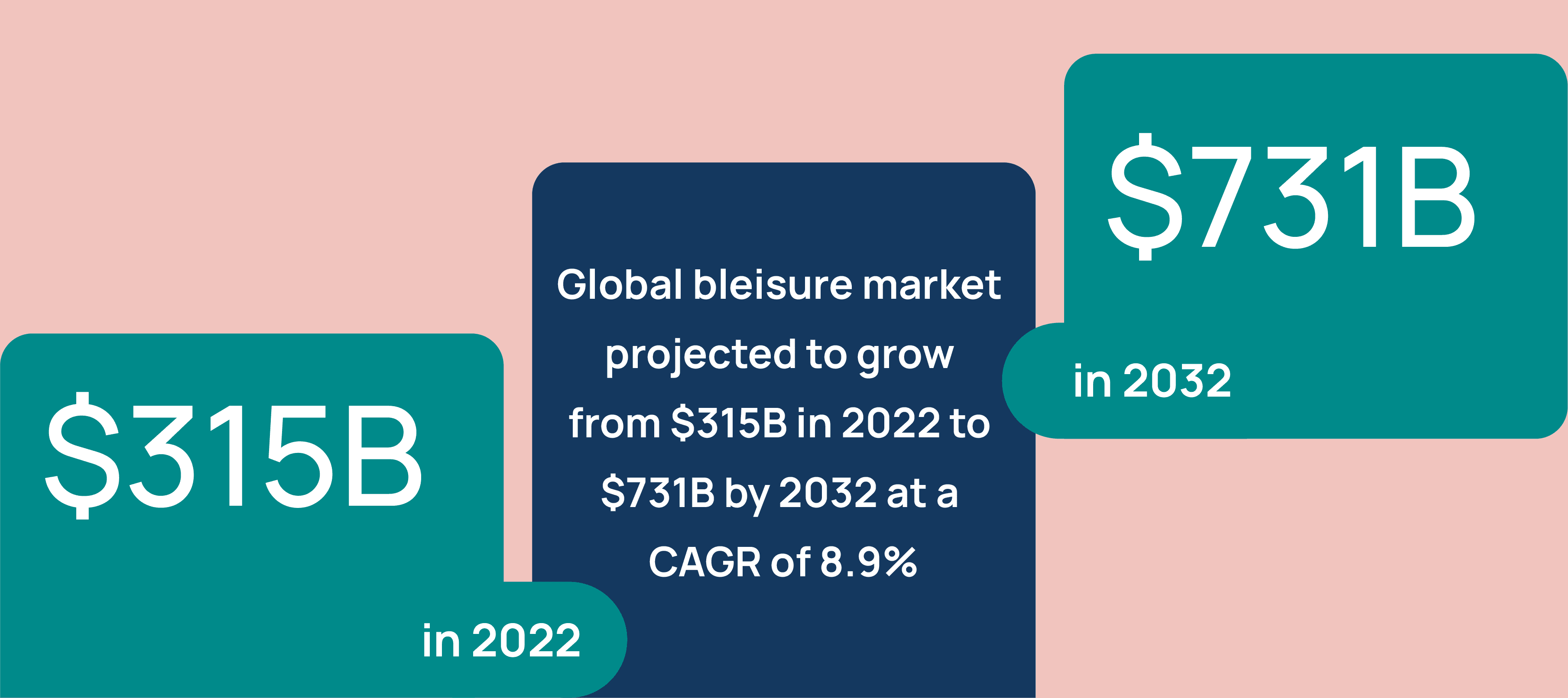
- The global bleisure travel market is predicted to grow from about US$315 billion in 2022 to over US$731 billion by 2032 at an 8.9% CAGR (source)
 From a CFO’s standpoint, these figures are not just travel stats, they indicate a structural shift in travel behavior that intersects directly with policy enforcement, cash flow, and compliance risk.
The Financial and Compliance Challenges of Blended Travel
A. Expense leakage risks are not hypothetical, they’re measured
Expense leakage is any spend outside approved policy controls. Booking compliance is not universal, and off-channel travel activity reduces visibility and rate control.
For CFOs, blended business-leisure segments create cost ambiguity. Direct supplier bookings and unmanaged extensions bypass negotiated rates and approval workflows, distorting forecasts and complicating P&L reconciliation.
At scale, small deviations compound into measurable cost variance and audit risk.
B. Duplicate and misallocated claims add hidden cost
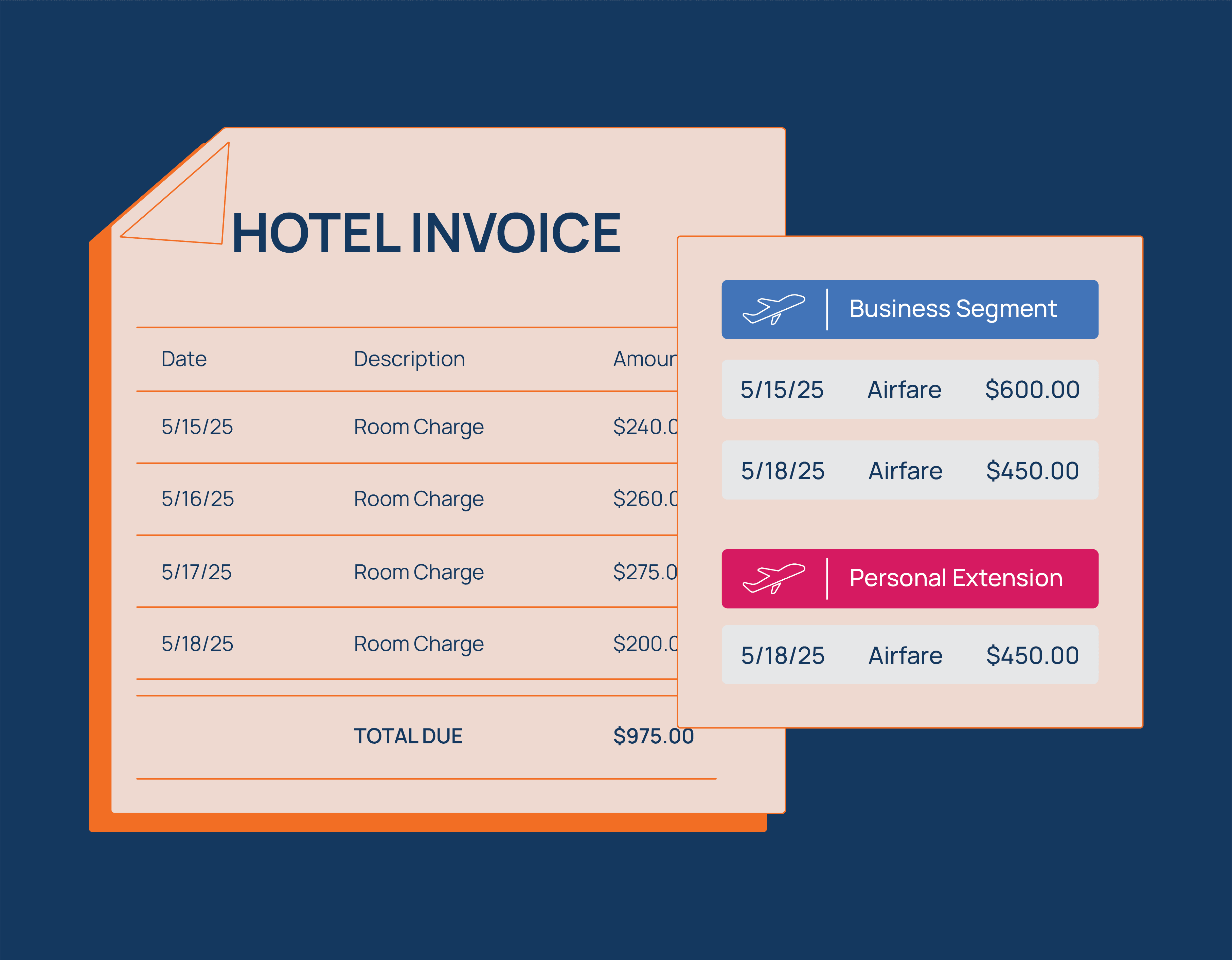 Bleisure trips often result in complicated billing and reimbursement scenarios:
- Mixed hotel bills containing both business and leisure nights
- Airfare that spans business and personal days
- Transport and local travel costs that are only partially business-related
Without automated rules or accurate split calculations, organizations risk reimbursing employees for personal travel components or approving expenses that should correctly be personal outlays. This not only distorts the travel cost picture but also erodes policy integrity.
C. Manual approvals - unsustainable and error prone
Traditional, manual expense approvals are slow and often lack real-time validation. Managers may receive expense reports weeks after trip completion, meaning policy violations are discovered too late, and corrective action is cumbersome. Without real-time compliance checks and automated flags for mixed travel charges, finance teams are burdened with back-end reconciliation rather than proactive control.
Risk and Duty of Care - Strategic Imperatives, Not Afterthoughts
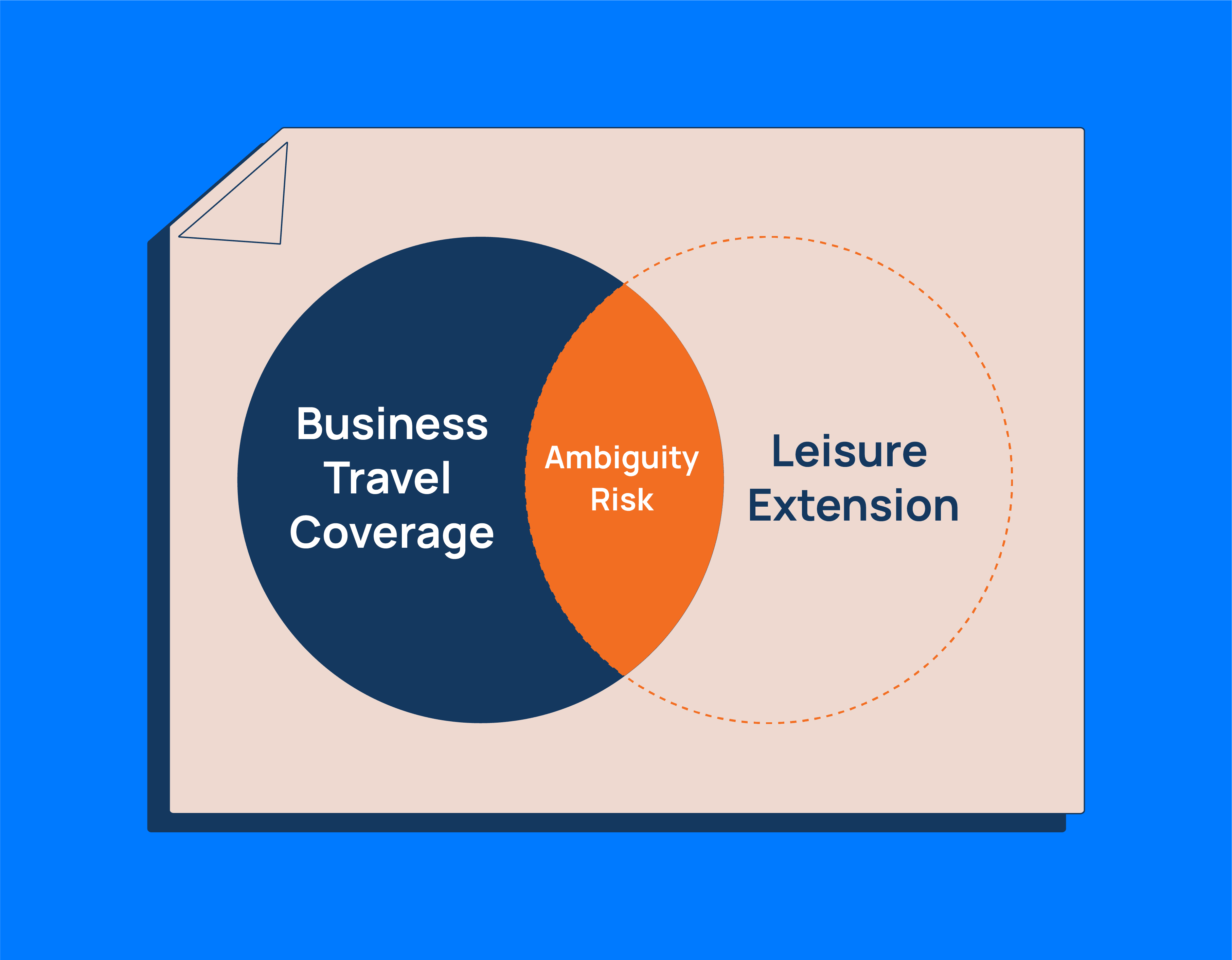 Bleisure travel complicates organizational duty of care, the responsibility to ensure employee safety during business travel.
Key issues include:
- Insurance coverage ambiguities: Many corporate risk policies are only valid during the official business portion of travel. Employers need clarity on where their obligation ends and personal responsibility begins.
- Safety support during leisure extensions: According to a BCD Travel survey of global business travelers, 64% of respondents did not know if their organization provided travel risk or medical coverage when they extended business trips for leisure, highlighting ongoing ambiguity in how companies treat bleisure risk.
- Blended risk profiles: During leisure segments, employees may engage in riskier activities that fall outside corporate protocols, creating gaps that traditional travel insurance and duty of care frameworks do not cover.
For CFOs, these considerations feed directly into global travel liability planning, insurance cost assessments, and compliance monitoring.
A Modern Governance Framework That Balances Flexibility and Control
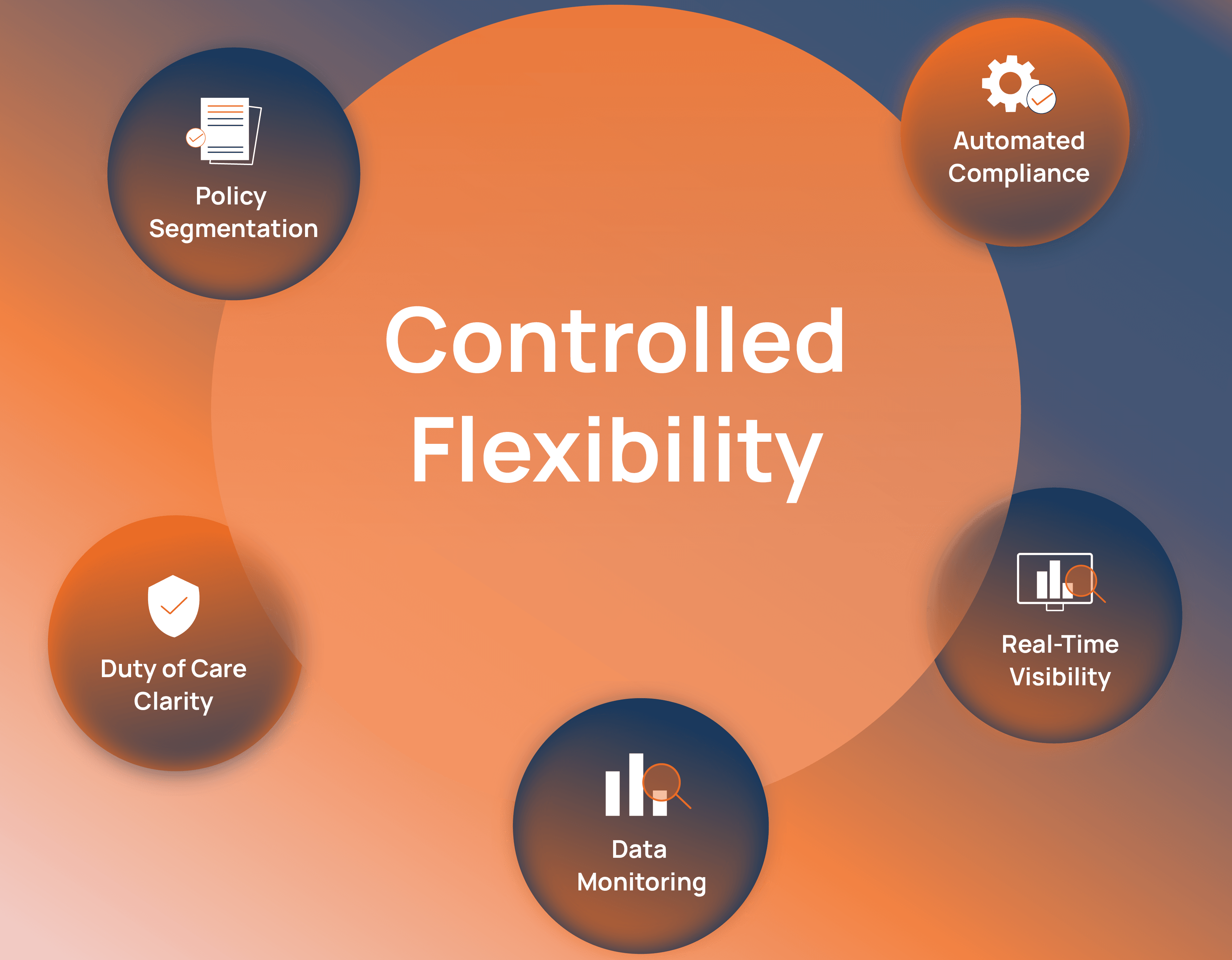 Rather than restricting the practice, finance and travel leaders should adopt a governance approach that accommodates bleisure within a controlled framework. Key elements include:
Policy clarity and segmentation rules
- Explicitly define which portions of a bleisure trip are eligible for reimbursement
- Segment business and personal cost components at the point of booking to enable accurate accounting
Automated compliance and real-time visibility
- Adopt policy engines that automatically flag non-compliant expenses before approval
- Enable real-time expense visibility to reduce end-of-month reconciliation backlog
Defined duty of care boundaries
- Establish clear documentation on where corporate responsibility ends (e.g., business events vs leisure activities)
- Communicate these boundaries to travelers during the approval process
Regular data monitoring and budget forecasting
- Use analytics to understand trends in bleisure spending, leakage patterns, and policy exceptions
- Update travel budgets based on actual blended usage rather than rigid historical assumptions
CFOs Must Lead the Shift from Chaos to Controlled Flexibility
Bleisure travel changes the operating model of corporate travel. It blurs cost ownership, stretches traditional policy boundaries, and introduces risk variables that legacy frameworks were not built to handle.
For finance leaders, the question is no longer whether bleisure should be allowed, it is how it should be governed. This requires moving from reactive approvals to structured flexibility:
- Clear cost segregation between business and personal segments
- Defined insurance and duty-of-care boundaries
- Integrated booking and expense data for real-time visibility
- Policy language that eliminates grey areas before disputes arise
When governance evolves alongside traveler behavior, flexibility does not weaken control, it strengthens it. The objective is not restriction, but precision - enabling employee autonomy while maintaining financial discipline, audit readiness, and predictable spend.
In that shift from unmanaged exception to structured framework lies the organization’s opportunity to convert bleisure from a source of variance into a model of controlled adaptability.

Disha Chatterjee
Senior Content MarketerIn this article
1.Bleisure Travel - How Significant Is It? What CFOs Must Know
2.The Financial and Compliance Challenges of Blended Travel
3.Risk and Duty of Care - Strategic Imperatives, Not Afterthoughts
4.A Modern Governance Framework That Balances Flexibility and Control
5.CFOs Must Lead the Shift from Chaos to Controlled Flexibility

Related Blogs